RJMEC Presents Quarterly report to RTNLA, cautions amendments abrogate R-ARCSS supremacy, integrity
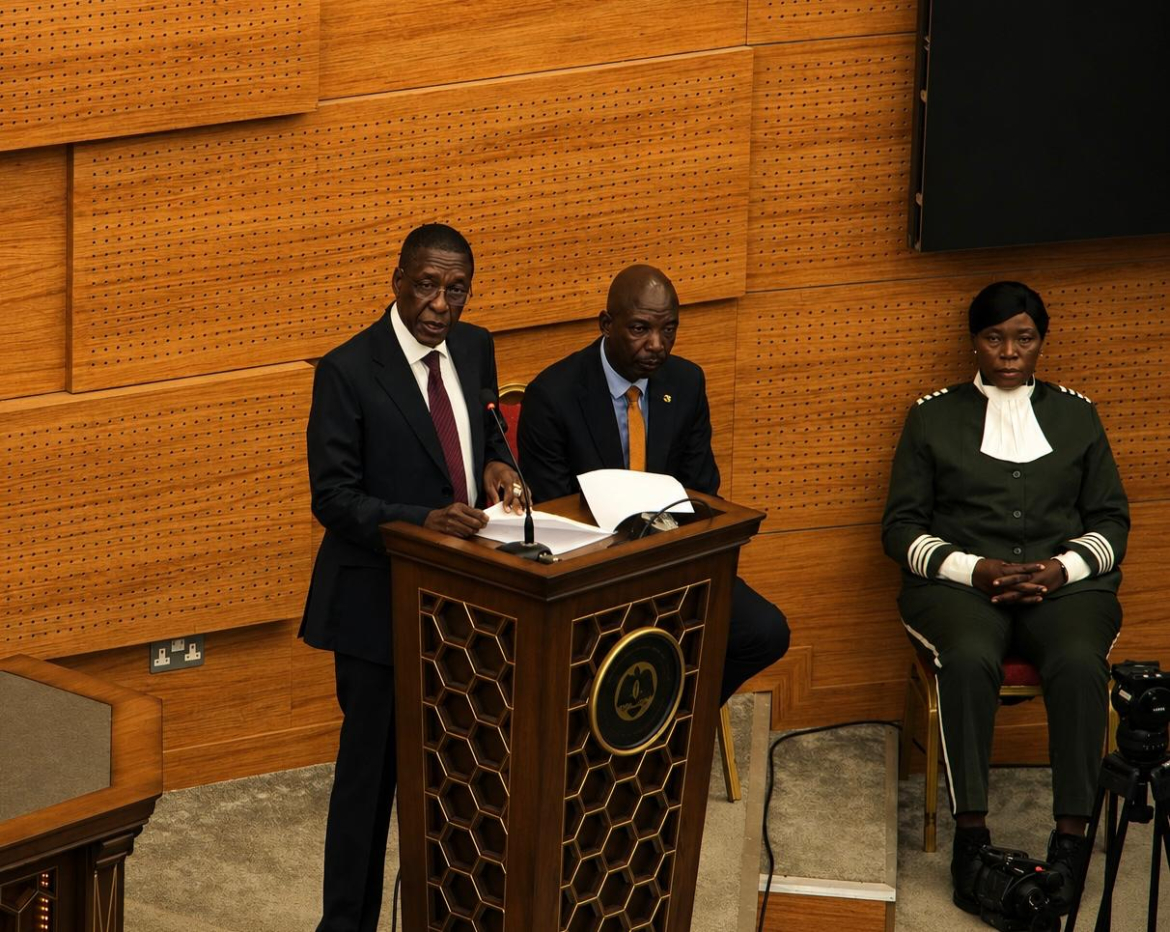
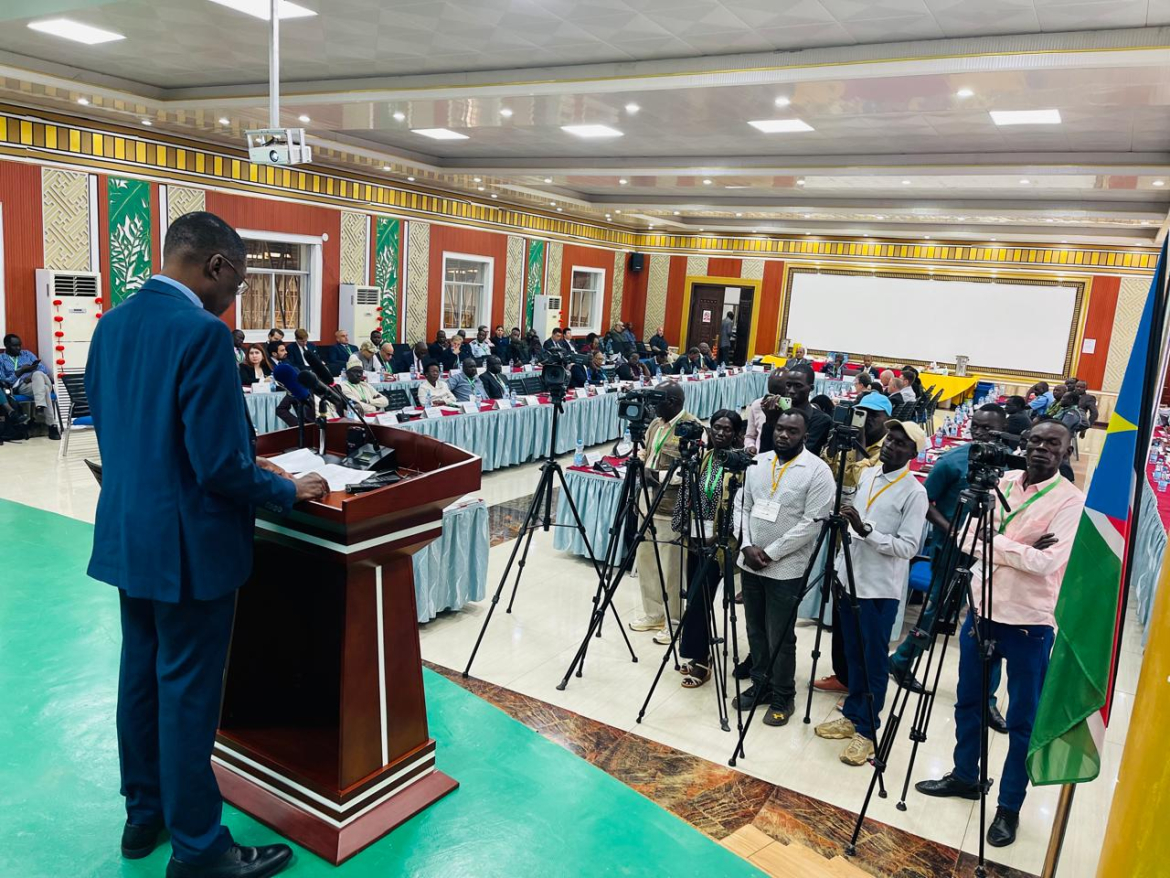
The Reconstituted Joint Monitoring and Evaluation Commission (RJMEC) today, Wednesday 20 May 2026, presented its quarterly report to the Reconstituted Transitional National Legislative Assembly (RTNLA).
The briefing, covering the period from 1 January to 31 March 2026, follows a report, submitted in accordance with Article 7.9 of the Revitalised Agreement on the Resolution of the Conflict in the Republic of South Sudan (R-ARCSS), which mandates RJMEC to provide quarterly updates to the RTNLA on the status of implementation of the Agreement.
Addressing Members of Parliament, RJMEC Interim Chairperson Amb. Maj. Gen. George Owinow (rtd) stated that implementation of the R-ARCSS had “considerably faltered” during the reporting period, noting that in some cases, “peace dividends achieved over the first seven years of the Agreement have been eroded.
Regarding the proposed amendments to the R-ARCSS currently before the RTNLA, Amb. Owinow informed the Assembly, that, following his extensive consultations with RJMEC members, including representatives of the Parties to the R-ARCSS, Other South Sudanese Stakeholders and Adherents, Regional Guarantors, and International Partners and Friends of South Sudan, concerns were raised regarding the context of the amendments, including ongoing systematic violations of the Agreement and the exclusion of some key Party signatories.
He further reported that the majority of the RJMEC members and stakeholders emphasized that the R-ARCSS is not limited to elections, but also includes critical peacebuilding and democratic governance reforms that remain essential both before and after elections and must not be abandoned. The Chairperson noted that while Articles 1.2.5 and 1.2.14 of the R-ARCSS relate directly to elections, the justification advanced for the proposed amendment remains within the electoral framework. However, he cautioned that Articles 8.2 and 8.3 of the R-ARCSS, extend beyond elections and carry broader legal and institutional implications for the Agreement.
He observed that some of the proposed amendments would alter the structure and architecture of the R-ARCSS, undermining its legal foundation, abrogating its supremacy, and weakening the oversight role of IGAD and the African Union as guarantors, urging the legislators to reaffirm the supremacy and binding nature of the Revitalised Peace Agreement, stressing that any amendments must preserve its integrity, legality, and continuity.
He further cautioned that without such safeguards, the risk of political fragmentation and renewed large-scale violence would continue to rise, with serious implications for national and regional stability.
He called on the Assembly members, “irrespective of their political affiliation, to continue playing a critical role in supporting the full and faithful implementation of the R-ARCSS in order to restore public confidence in the transition.”
“The R-ARCSS derives its authority from the consent of all Parties, and its incorporation into the constitutional framework makes it a foundational document for South Sudan,” he said, adding that safeguards are necessary to preserve its legitimacy and the rule-based foundation of the transition.
He reaffirmed that the R-ARCSS remains the most viable framework for sustainable peace, stability, unity, and democratization in South Sudan, urging all leaders and stakeholders to uphold its integrity and ensure a peaceful and democratic conclusion to the transitional period.
“As RJMEC, we remain committed to constructively engaging with the RTGoNU Executive to ensure compliance with the provisions of the Agreement. Where contestation arise, we rely on the guidance of the IGAD Council of Ministers, as guarantor pursuant to Article 7.10 of the R-ARCSS,” he concluded.